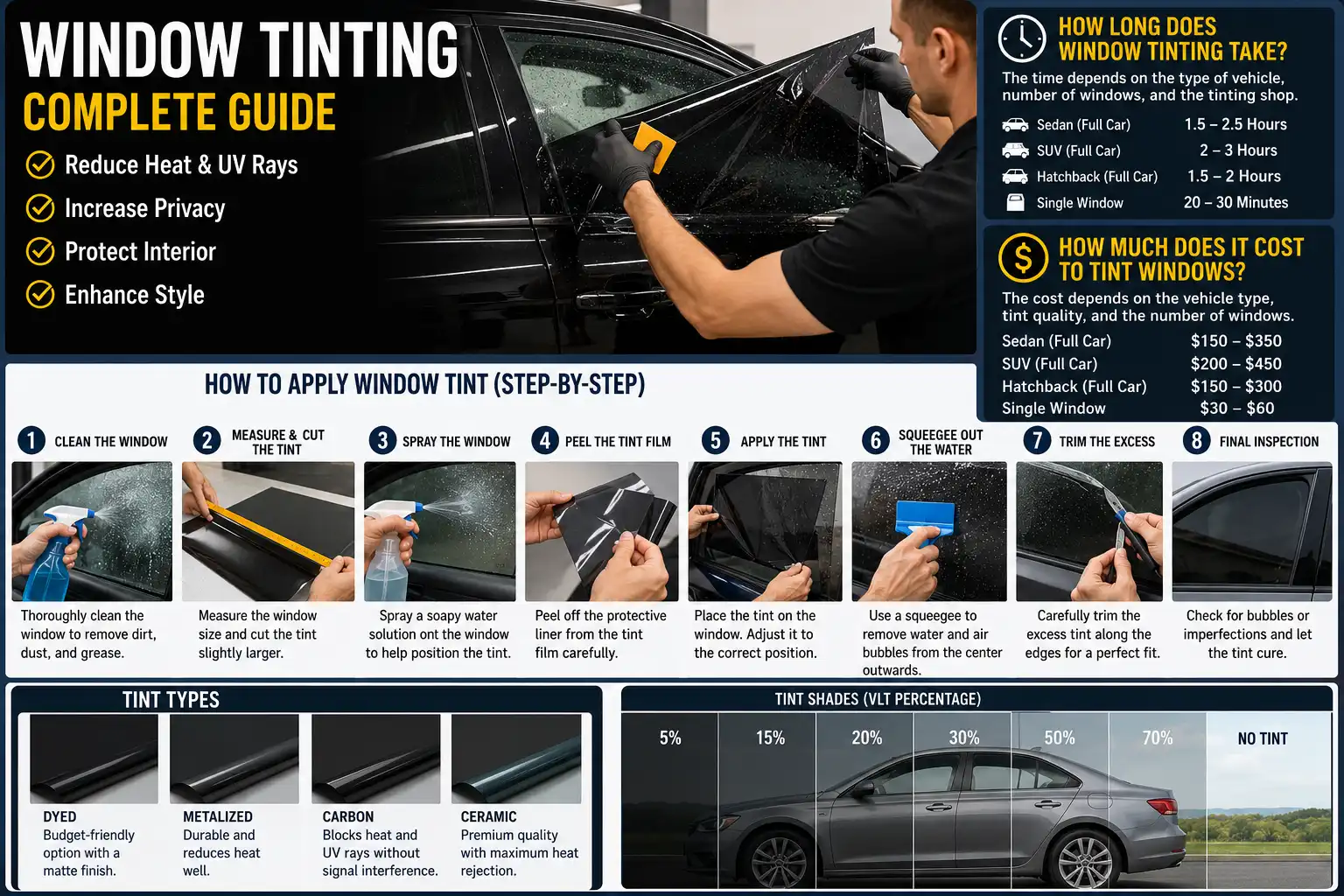
Window tinting is one of the most popular car upgrades for drivers who want better privacy, UV protection, reduced heat, and improved vehicle appearance. Whether you are planning to tint your car windows professionally or install tint yourself, understanding the process, cost, and installation methods is important.
In this complete guide, you’ll learn how long window tinting takes, how much window tinting costs, how to apply window tint, and how to tint car windows properly.
Why Window Tinting Is Popular
Car window tinting offers multiple benefits beyond appearance. High-quality tint film can significantly improve driving comfort and protect your vehicle interior.
Main Benefits of Window Tinting
- Reduces interior heat
- Blocks harmful UV rays
- Improves privacy
- Enhances vehicle appearance
- Reduces glare while driving
- Helps protect interior materials from fading
- Adds an extra layer of safety during accidents
Modern tint films are available in various shades and materials, including dyed, ceramic, carbon, and metallic window tints.
How Long Does Window Tinting Take?
One of the most common questions people ask is how long window tinting takes.
The answer depends on several factors:
- Vehicle size
- Number of windows
- Tint film quality
- Installer experience
- Whether old tint must be removed first
Average Window Tinting Time
Sedan
- Usually takes 1.5 to 3 hours
SUV or Large Vehicle
- Usually takes 2 to 4 hours
Full Vehicle Tint With Old Tint Removal
- May take 4 to 6 hours
Professional tint shops typically complete the process faster because they use precision tools and pre-cut film templates.
Why Tinting Sometimes Takes Longer
Certain situations increase installation time:
Curved Rear Windows
Rear windshields are more difficult to tint because of their curved shape.
Removing Old Tint
Old bubbling tint and adhesive residue require additional preparation.
High-End Ceramic Tint
Premium ceramic films need careful handling during installation.
Weather Conditions
Dust, humidity, and cold temperatures may affect installation speed.
How Much Does It Cost to Tint Windows?
Window tint pricing depends mainly on the film type, vehicle size, and installer quality.
Average Car Window Tinting Cost
Basic Dyed Tint
- Budget-friendly option
- Usually the cheapest type
Carbon Window Tint
- Better heat reduction
- Improved durability
Ceramic Window Tint
- Premium option
- Excellent UV and heat rejection
- Most expensive tint type
Factors That Affect Window Tint Cost
Vehicle Type
Larger vehicles require more tint film and labor.
Number of Windows
Tinting the full vehicle costs more than tinting only side windows.
Tint Quality
Higher-quality films last longer and perform better.
Professional Installation
Experienced installers may charge more but usually provide cleaner results.
Warranty Coverage
Premium tint packages often include longer warranties.
How Much Does Window Tinting for a Car Cost?
The total cost of tinting a car varies widely depending on your goals.
Entry-Level Tint Packages
Basic tint packages are affordable and suitable for drivers who mainly want improved appearance and privacy.
Mid-Range Tint Packages
Mid-range films offer better heat reduction and durability.
Premium Ceramic Tint Packages
Ceramic window tint is considered the highest-quality option because it blocks heat effectively without interfering with electronics or visibility.
Is Professional Tint Worth It?
Professional installation usually provides:
- Cleaner edges
- Fewer bubbles
- Better durability
- Faster installation
- Warranty protection
DIY tint kits may save money initially, but mistakes can lead to peeling, creasing, or trapped dust.
How to Apply Window Tint
Learning how to apply window tint properly requires patience, precision, and clean working conditions.
Tools Needed to Apply Window Tint
Before starting, gather these materials:
- Window tint film
- Spray bottle
- Soapy water solution
- Squeegee
- Razor blade
- Heat gun or hair dryer
- Microfiber cloth
- Utility knife
Step-by-Step Guide: How to Install Window Tint
Step 1: Clean the Windows Thoroughly
Proper cleaning is extremely important.
Any dirt, lint, or dust trapped under the film will create bubbles.
Use glass cleaner and microfiber cloths to clean both inside and outside surfaces.
Step 2: Measure and Cut the Tint Film
Place the tint film on the outside of the window and cut it slightly larger than the glass.
Always leave extra material for final trimming.
Step 3: Spray the Window With Soapy Water
The soap solution helps position the tint film during installation.
Lightly spray the inside surface of the window.
Step 4: Remove the Tint Backing
Carefully peel the transparent backing layer from the tint film.
Avoid touching the adhesive side too much.
Step 5: Apply the Tint Film
Place the adhesive side against the wet glass.
Adjust the position carefully before smoothing.
Step 6: Remove Air Bubbles
Use a squeegee to push water and air bubbles outward.
Work slowly from the center toward the edges.
Step 7: Trim the Edges
Use a sharp utility knife to trim excess film carefully.
Precise trimming creates a professional appearance.
Step 8: Heat and Finish the Tint
Use a heat gun lightly to help the film conform to curved windows.
Continue smoothing until the film fully settles.
How to Tint Windows Like a Professional
Professional-looking results require attention to detail.
Work in a Clean Environment
Dust is one of the biggest causes of poor tint installation.
A garage or enclosed workspace works best.
Use Quality Tint Film
Cheap tint often fades, bubbles, or turns purple quickly.
Be Patient During Installation
Rushing usually causes wrinkles or trapped air bubbles.
Use Proper Tools
Professional tools improve accuracy and finish quality.
Common Window Tinting Mistakes
Installing Tint on Dirty Glass
Even tiny particles can ruin the final appearance.
Applying Too Much Heat
Excessive heat may damage the tint film.
Using Low-Quality Film
Cheap film often fails quickly under sunlight.
Trimming Incorrectly
Uneven edges make the tint look unprofessional.
Ignoring Local Tint Laws
Some tint shades may be illegal in certain regions.
Always check local regulations before installation.
Types of Car Window Tint
Dyed Window Tint
Affordable and common.
Provides privacy and appearance enhancement.
Metallic Window Tint
Reflects heat effectively but may interfere with electronics.
Carbon Window Tint
Offers better durability and heat rejection.
Ceramic Window Tint
Premium option with superior performance and visibility.
How Long Does Window Tint Last?
High-quality tint can last many years with proper care.
Factors Affecting Tint Lifespan
- Sun exposure
- Film quality
- Installation quality
- Climate conditions
- Maintenance habits
Ceramic and carbon films generally last longer than basic dyed films.
How to Maintain Window Tint
Proper maintenance helps prevent peeling and fading.
Avoid Rolling Down Windows Immediately
After installation, wait several days before lowering windows.
Use Gentle Cleaners
Avoid ammonia-based cleaners because they may damage the tint.
Clean With Microfiber Cloths
Soft cloths help prevent scratches.
DIY Window Tint vs Professional Installation
DIY Tinting
Advantages
- Lower upfront cost
- Good learning experience
- Flexible timing
Disadvantages
- Difficult for beginners
- Higher chance of mistakes
- No warranty
Professional Tinting
Advantages
- Better finish quality
- Faster installation
- Professional tools
- Warranty support
Disadvantages
- Higher cost
Conclusion
Window tinting is an excellent upgrade for improving comfort, privacy, and vehicle appearance. Whether you want to learn how to install window tint yourself or understand professional tinting costs, choosing the right film and installation method is important.
The time required for tinting depends on the vehicle size and film quality, while pricing varies based on tint type and installer expertise. DIY tinting can save money, but professional installation usually delivers cleaner and longer-lasting results.
By using quality materials, following proper installation steps, and maintaining the tint correctly, you can enjoy the benefits of tinted windows for many years.
FAQ – Car Window Tinting
How long does window tinting take?
Most cars take between 1.5 and 4 hours depending on vehicle size and tint complexity.
How much does it cost to tint windows?
Window tint cost varies depending on the film type, vehicle size, and installer quality.
How much does window tinting for a car cost?
Basic tint packages are more affordable, while premium ceramic tint packages cost significantly more.
How do you apply window tint?
Window tint is applied by cleaning the glass, spraying a soap solution, positioning the film, removing bubbles, and trimming the edges.
Can I install window tint myself?
Yes, but DIY tinting requires patience, proper tools, and practice for professional-looking results.
What is the best type of window tint?
Ceramic tint is considered one of the best options because it provides excellent heat rejection and UV protection.
How long does window tint last?
High-quality window tint can last many years depending on maintenance and environmental conditions.
Does window tint reduce heat?
Yes, quality tint films significantly reduce interior heat and sunlight exposure.
Can window tint be removed?
Yes, old tint can be removed using heat, steam, or adhesive-removal methods.
Is dark window tint legal?
Tint laws vary by region, so always check local regulations before installation.